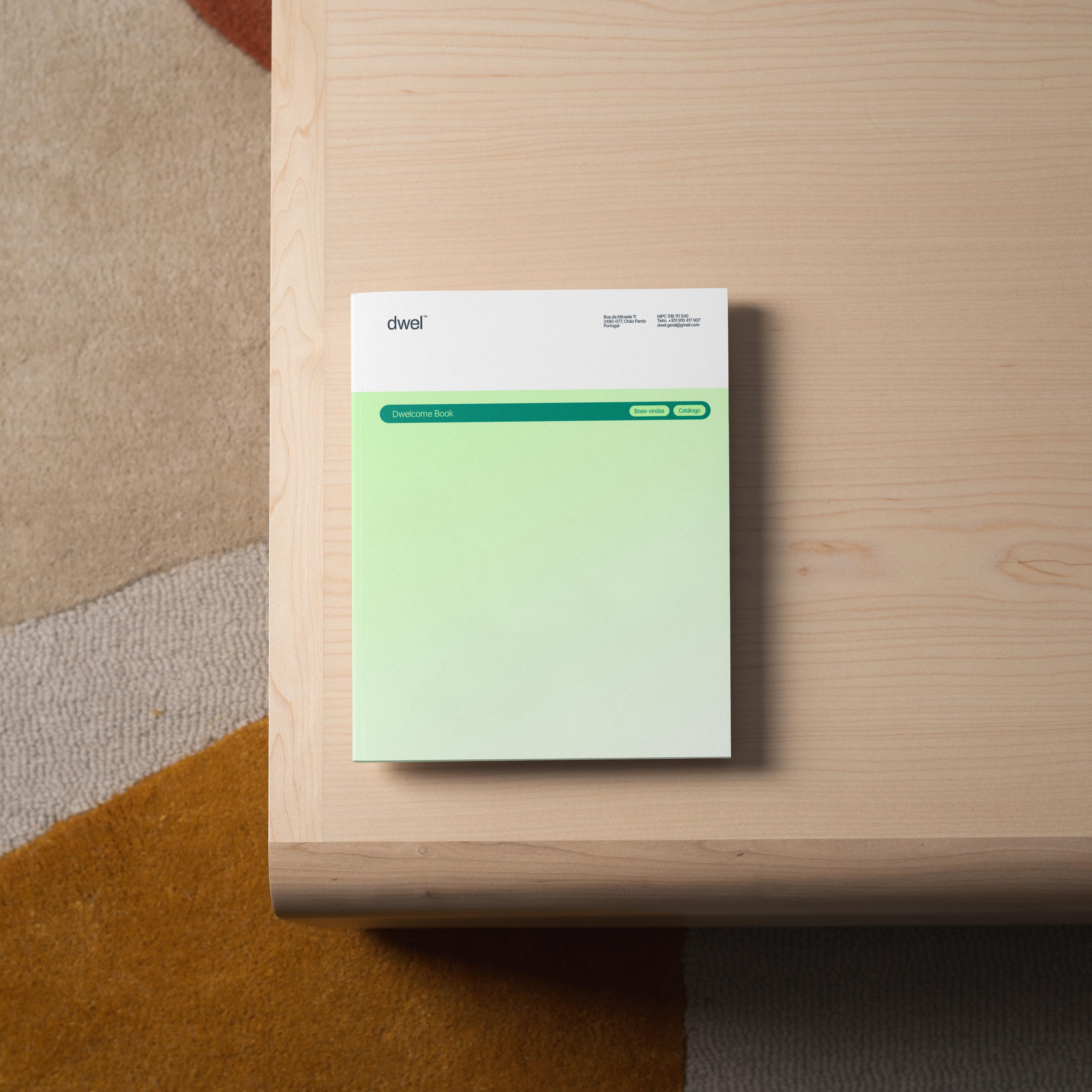
Your logo is not your brand. Neither is your website.
A logo, a social profile and a few-hundred-euro website have somehow become shorthand for having a brand, and having a brand has become shorthand for getting customers. Neither shortcut holds. Customers come from a working business. Branding comes later, and it does a different job.

There is a belief doing the rounds that starting a business begins with commissioning a logo. First the symbol, then the Instagram page, then a website thrown together in a weekend, and from there the customers turn up on their own. They do not. And when they fail to, the blame almost always lands in the wrong place.
Customers come from a business, not from branding
Getting customers takes three things, in this order: a product or service that solves a real problem, someone willing to pay for it, and a place where that purchase can actually happen. That is what makes a business exist. None of those three things is design.
The confusion comes from misreading a correlation. We look at strong brands, notice they have plenty of customers, and conclude the branding brought them in. In the overwhelming majority of cases it ran the other way. The business worked first, generated demand, and only then invested in branding to organise, defend and scale what it had already won.
Branding does not manufacture demand where none exists. It positions a business in front of the right customers, gives it authority, and makes what it already does well recognisable. It is a positioning tool, not an ignition switch.
A brand is far more than a logo
The logo is the signature. The brand is the whole document.
A brand covers positioning, meaning the space it occupies in a customer's head and who it is measured against. It covers personality and tone of voice, how it speaks and what it would never say. It covers a complete visual system: typography, colour palette, grids, image treatment, photography, iconography and clear rules for applying all of it. Above all, it defines how those decisions behave once they leave the designer's screen.
Because a brand does not live in a file. It lives on the website, on Instagram, in the email signature, on the invoice, the flyer, the poster, the van, the shopfront, the packaging, and the card handed to someone at a trade fair in Santarém. If each of those materials looks like it was made by a different person, there is no brand. There are loose parts sharing a name.
The consistency test
Here is a simple and slightly uncomfortable test. Cover the logo on every piece of material a company produces and ask whether you can still tell they come from the same house. If the answer is no, what exists is a logo, not a brand.
This is exactly why consistency matters more than the mark itself. The brands you recognise from across a room are rarely recognised by their symbol. They are recognised by the whole: the colour, the spacing, the typeface, the register they write in.
The problem with turnkey brand packages
Plenty of studios and freelancers sell a few-hundred-euro website bundled with a logo, a domain and business email, and present the whole thing as building a brand. It is not. It is a bundle of technical deliverables.
The pattern repeats with almost comic regularity: an off-the-shelf template, an identical structure from client to client, a logo knocked out in an afternoon or the client's old logo dropped in untouched, and a site that has no visual conversation with that logo at all. Same generic typeface, same sections, same stock photography. Swap the name in the header and the site would serve any business, which is another way of saying it serves none of them well.
The issue is not the low price. A simple website can cost very little and be perfectly well made, provided it is sold as what it actually is. The issue is the label. When a technical bundle is sold as brand identity, the client walks away convinced they have solved something they have not even started. Frequently that client did not have a usable logo in the first place, which means the honest advice would have been to sort out the brand design before writing a single line of code.
The damage runs deeper than it looks
Once a market believes a brand costs four hundred euros, serious brand design loses any usable frame of reference. Studios like Concreto Studio in Rio Maior, along with many others working across Caldas da Rainha, Santarém and Leiria, end up justifying four-figure quotes against a benchmark that was never comparable in the first place. Not because the work is expensive, but because the ruler got broken.
There is a second, less discussed consequence. Studios lose the ability to offer small work. A simple, honest, well-executed website for a few hundred euros becomes almost impossible to communicate, because it would land in the same visual bucket as the disposable package. Everyone loses, including the client who only ever needed something small and done properly.
When branding is worth the investment
When customers already exist and the business needs to be choosier about which ones to serve. When it wants to raise prices and needs an appearance that holds that price up. When materials start multiplying and nobody can remember which blue is the right blue. When it is entering a market where credibility gets judged in about three seconds.
Until then, the business comes first: product, demand, and a channel to sell through. After that, the priority is doing it properly, with people who know how, and holding the work to verifiable standards such as legibility, contrast and accessibility, whose minimums are set out in the WCAG.
A logo opens a file. A brand opens a conversation.
In plain words
- Brand design: The design discipline that builds a business complete identity, covering positioning, personality, tone of voice and visual system, rather than the logo alone.
- Visual identity: The set of graphic elements that represent a brand coherently, including typography, colour palette, grids, iconography and image treatment.
- Positioning: The place a brand occupies in a customer mind relative to competitors, which determines who it speaks to and at what price it presents itself.
- Tone of voice: The consistent way a brand communicates in writing and speech, including vocabulary, rhythm and the things it would never say.
- Brand guidelines: The document setting out how the identity is applied across every digital and physical medium, keeping it coherent over time.
- Template: A pre-built website model reused across multiple projects, which speeds up production but produces no distinctive identity.
- WCAG: Web Content Accessibility Guidelines, the international standards defining minimum accessibility criteria for websites, such as colour contrast and legibility.